
No Interest Whatsoever.
I have reached the conclusion that modern banking is no longer a service.
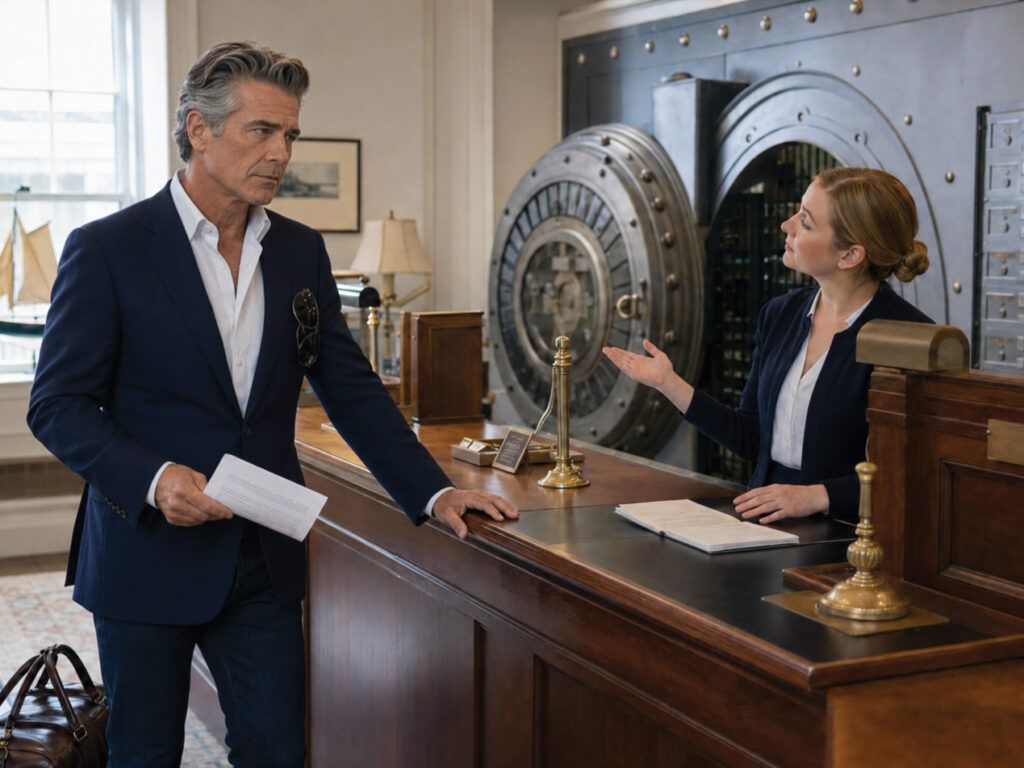
I have reached the conclusion that modern banking is no longer a service. It is an obstacle course with marble floors, limited Saturday hours and a customer-service department trained to express concern without producing anything resembling assistance.
Years ago, while visiting my house in Nantucket, I accepted a premier banking package supposedly reserved for a select tier of clients. The banker presented it with considerable ceremony, as though I were being admitted to a secret financial society rather than receiving a checking account with better stationery. Among its many privileges was a complimentary safe-deposit box.
I may have used it. I may not have. I do not remember, and until recently, I did not care. If I placed anything inside, it was probably an insurance document, an obsolete passport or cuff links I had already decided were too small. I sold the Nantucket house years ago and assumed the bank account, the complimentary box and the banker’s theatrical reverence had all drifted into history together.
The bank had other plans. Apparently, somewhere between then and now, it changed the terms of its premier banking program and removed the complimentary safe-deposit box. The box remained, but the privilege did not. It had quietly transformed into a fee-generating metal drawer hundreds of miles from my home.
I was undoubtedly notified. Banks adore notifications because they allow institutions to claim they have communicated without confirming that anyone has actually read a word. I refuse to read small print and rarely open routine mail. I have people for these things, although even the most capable assistant cannot manage correspondence that I have deposited directly into the trash.
By the time one envelope survived my sorting system, the modest box fee had acquired late charges, legal language and warnings about the possible ruination of my credit score. Nothing sharpens one’s attention quite like learning that an abandoned metal compartment in Massachusetts may jeopardize decades of financial responsibility.
I called the bank and explained that I wished to close the box. The representative informed me that I would need to appear in person. Ordinarily, I would object to flying more than a thousand miles to close something I do not remember opening. However, I am always receptive to an excuse involving a private jet and Nantucket, so I arranged a short weekend visit. I landed Saturday morning and made the bank my first stop, arriving well within its generous operating window of 9 a.m. to noon.
The teller listened patiently before informing me that safe-deposit matters required an appointment during the week.
I explained that the bank had instructed me to appear in person. She agreed that it had. I pointed out that I was now standing in person inside the bank. She agreed with that as well. Unfortunately, I had arrived on the wrong day to be the correct person.
I returned home without closing the box, learning what it contained or encountering anyone willing to take responsibility for either problem. On Monday, I called the bank’s corporate headquarters and suggested a fairly obvious solution: Send me an affidavit, verify my identity, collect whatever fee they believe I owe and close the wretched thing.
This, I was told, was not part of their protocol.
Of course it wasn’t. Protocol is the fortified wall behind which customer service goes to avoid making decisions. Several representatives expressed sympathy, although one particular snarky teller suggested I withdraw my funds and take my by banking elsewhere. However, no one possessed the authority, imagination or apparent telephone extension required to resolve it.
The safe-deposit box therefore remains open. Its contents remain a mystery. The fees are presumably continuing to accumulate, and somewhere in Nantucket, a small metal drawer has achieved greater control over my travel schedule than most members of my family.
If the bank eventually drills it open, I hope they discover something valuable. At this point, an employee willing to take ownership of the problem would qualify.