
A Beaver Too Far
Earlier this week, I was speaking with a favorite cousin of mine, who happens to live in Ohio, where a particularly absurd piece of corporate theater is unfolding.
Earlier this week, I was speaking with a favorite cousin of mine, who happens to live in Ohio, where a particularly absurd piece of corporate theater is unfolding. I use the word “favorite” carefully. Family rankings, like good silver, should rarely be displayed in public.
She asked if I had heard about Buc-ee’s suing Beaver’s Mini Mart, a modest convenience store in Beavercreek. I had not. I assumed she was describing a parody invented during a long lunch.
Regrettably, it is real.
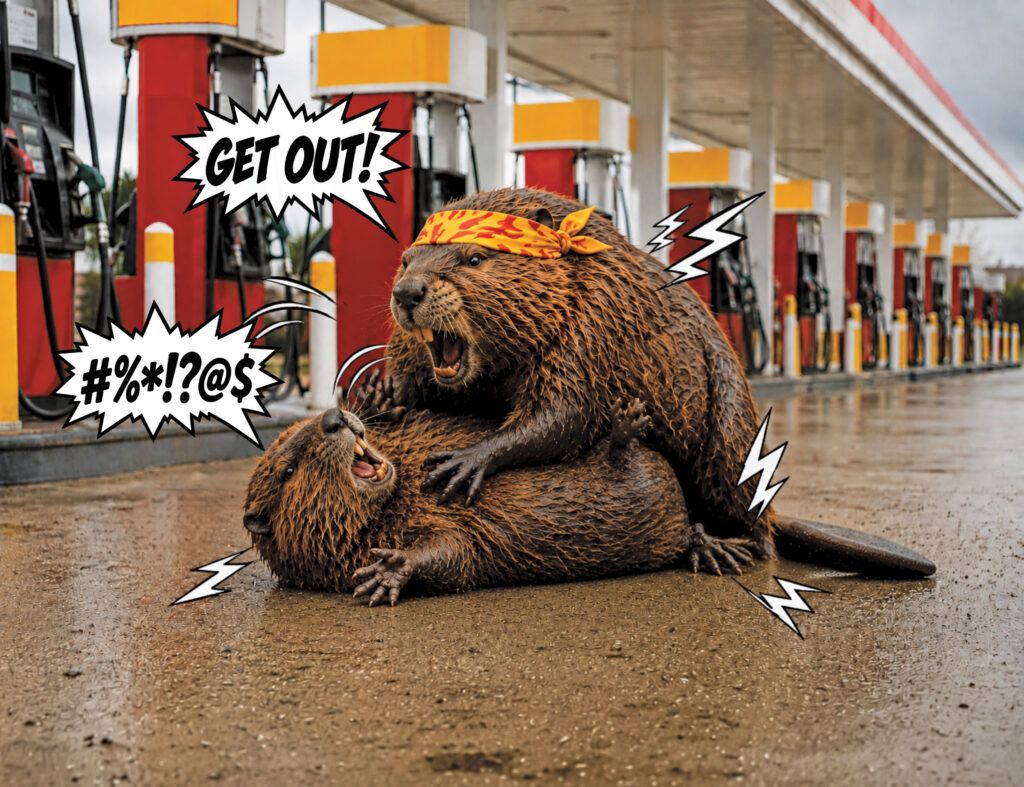
Buc-ee’s filed a federal trademark lawsuit against the local shop, arguing that its cartoon beaver, smiling expression, and use of red might confuse customers. Buc-ee’s opened its first Ohio location in April, roughly thirteen miles from Beaver’s Mini Mart, then filed suit on July 28. The corporate beaver wears a red cap inside a yellow circle. The Beavercreek beaver stands upright, gestures toward the store’s name, and offers a thumbs up. I have seen greater resemblance among men wearing navy blazers at charity dinners, yet no one has summoned a federal judge.
Buc-ee’s insists it is protecting a valuable trademark. Its chief executive has said the company took no pleasure in filing suit and would drop the case if Beaver’s Mini Mart withdrew its own trademark application.
How terribly noble.
I understand the obligation to protect intellectual property. A brand is an asset, and any competent steward guards an asset carefully. Competence, however, also requires proportion. One must be able to distinguish a genuine commercial threat from a small shop using a local animal in a city called Beavercreek.
The community’s association with the beaver dates to 1803, when Beavercreek Township was named for Big Beaver Creek and Little Beaver Creek. The City Council has since voted unanimously to affirm the beaver as a historic symbol of the community. Buc-ee’s may own its particular drawing. It does not own the animal, the color red, smiling, wide eyes, Ohio history, or apparently, common sense.
One might have thought corporate America would remember the Cracker Barrel logo debacle. Barely a year ago, that company removed Uncle Herschel and his barrel from its familiar logo, endured a national revolt, watched nearly $100 million in market value disappear, and restored the old design within a week.
People have forgotten remarkably quickly.
To be clear, I have never entered a Cracker Barrel. I have no intention of eating anything called a Beaver Nugget, and I undoubtedly have not touched a filthy gas pump handle in decades. I have people for one of those tasks and standards that preclude the other two.
Even from this comfortable distance, the lesson is obvious. Corporate executives routinely underestimate the emotional ownership customers and communities feel toward familiar symbols. Cracker Barrel treated its history as disposable. Buc-ee’s treats a cartoon rodent as private territory. Both companies allowed boardroom reasoning to overwhelm ordinary judgment.
What fascinates me is the peculiar belief among large corporations that these frivolous exercises actually benefit them.
Perhaps executives imagine the public will admire their vigilance. Perhaps someone presented a slide labeled “Brand Protection Strategy” and everyone nodded with grave importance. It is amazing how quickly foolishness acquires dignity once placed in a presentation and assigned outside counsel.
The practical result is rather different.
Beaver’s Mini Mart now has community support, a legal defense fundraiser, national publicity, and customers rallying to its side. Buc-ee’s has transformed a neighborhood convenience store into a sympathetic underdog while casting its own enormous beaver as the villain. That is quite an accomplishment. One could hire a very expensive public relations firm and still struggle to manufacture such damaging publicity.
There is a point at which aggressive brand protection becomes brand vandalism. Customers do not admire a company for selecting a much smaller opponent and burying it in legal costs. They see insecurity, vanity, and an alarming shortage of adult supervision.
The most powerful institutions understand restraint. They do not answer every perceived slight, pursue every technical advantage, or mistake the ability to apply pressure for a reason to do so. They choose their battles with care because reputation is far more difficult to repair than a trademark registration.
My cousin tells me the people of Beavercreek are enjoying the spectacle, which seems entirely appropriate. A corporation arrived in town, challenged a local beaver, and discovered that Ohioans possess both a sense of humor and a rather firm opinion about bullies.
Buc-ee’s may yet prevail in court. Legal victory, however, is not the same as good judgment. A company can win its claim and still lose the room.
Real stature requires proportion. Power is most persuasive when it knows when to leave the beaver alone.