The Devil Wears Prada 2
The Devil Wears Prada 2 doesn’t bother chasing the original’s sparkle.
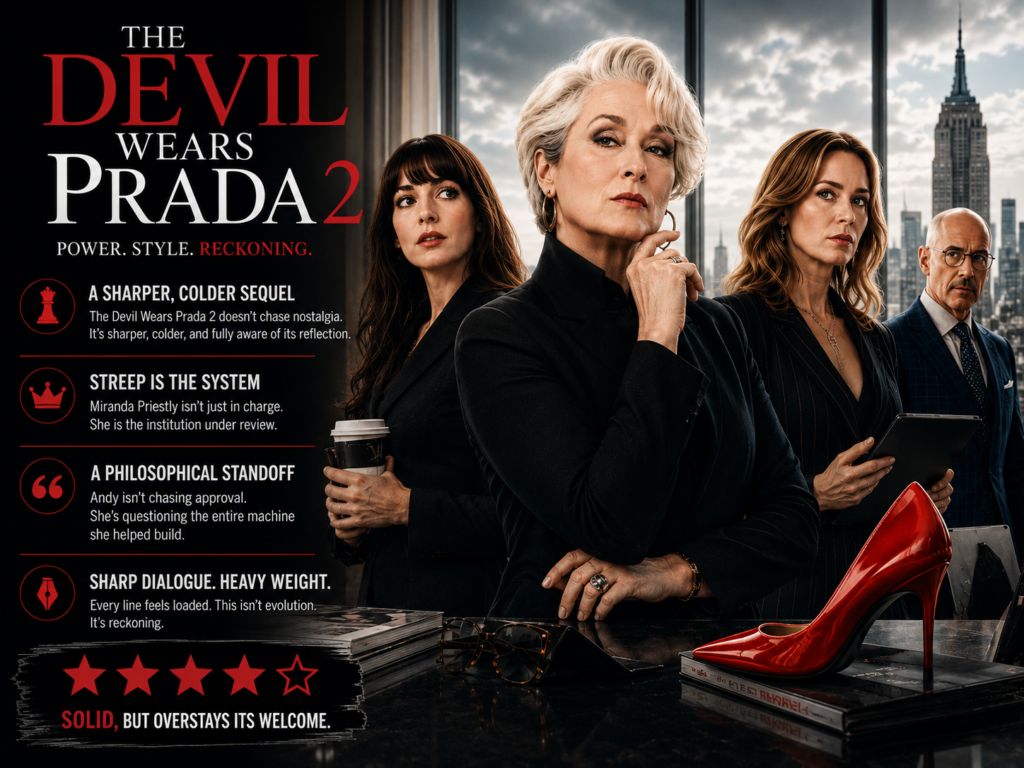
The Devil Wears Prada 2 doesn’t bother chasing the original’s sparkle. It cuts straight past it. What replaces it is sharper, colder, and far more aware of its own reflection.
The script leans hard into compromise, legacy, and the slow, creeping panic of irrelevance, and it doesn’t soften the blow. Dialogue feels loaded, sometimes brutally so, like every character walked in already knowing the verdict. This isn’t evolution. It’s reckoning. And the writing makes sure no one escapes it clean.
Meryl Streep’s Miranda Priestly returns with that signature, unshakable control, but the framing has shifted. She’s no longer just the woman in charge. She’s the system under review. An institution staring down the possibility that influence has an expiration date. Her lines land as statements about power, survival, and staying relevant.
Anne Hathaway’s Andy meets her there, not beneath her. This version of Andy isn’t chasing approval. She’s questioning the entire machine, fully aware she helped keep it running. The tension between them feels less like rivalry and more like a philosophical standoff.
Emily Blunt slides back in with precision, her Emily sharper, faster, and far less patient. Every line feels engineered to leave a mark. Stanley Tucci’s Nigel, meanwhile, operates as the film’s quiet conscience, offering moments of clarity in a world that rarely pauses long enough to notice itself unraveling.
A few subplots arrive dressed to impress but never quite justify their presence, and some returning characters feel more like obligations than necessities. Midway through, the film starts to drag, and attention drifts as it circles its themes a bit too long. Still, when it refocuses, it delivers. This isn’t about nostalgia. It’s about interrogation, even if it occasionally overstays its welcome.