The Perfect Neighbor
Three days after watching The Perfect Neighbor, I caught myself studying the house across the way because a Range Rover idled for five minutes at the gate.
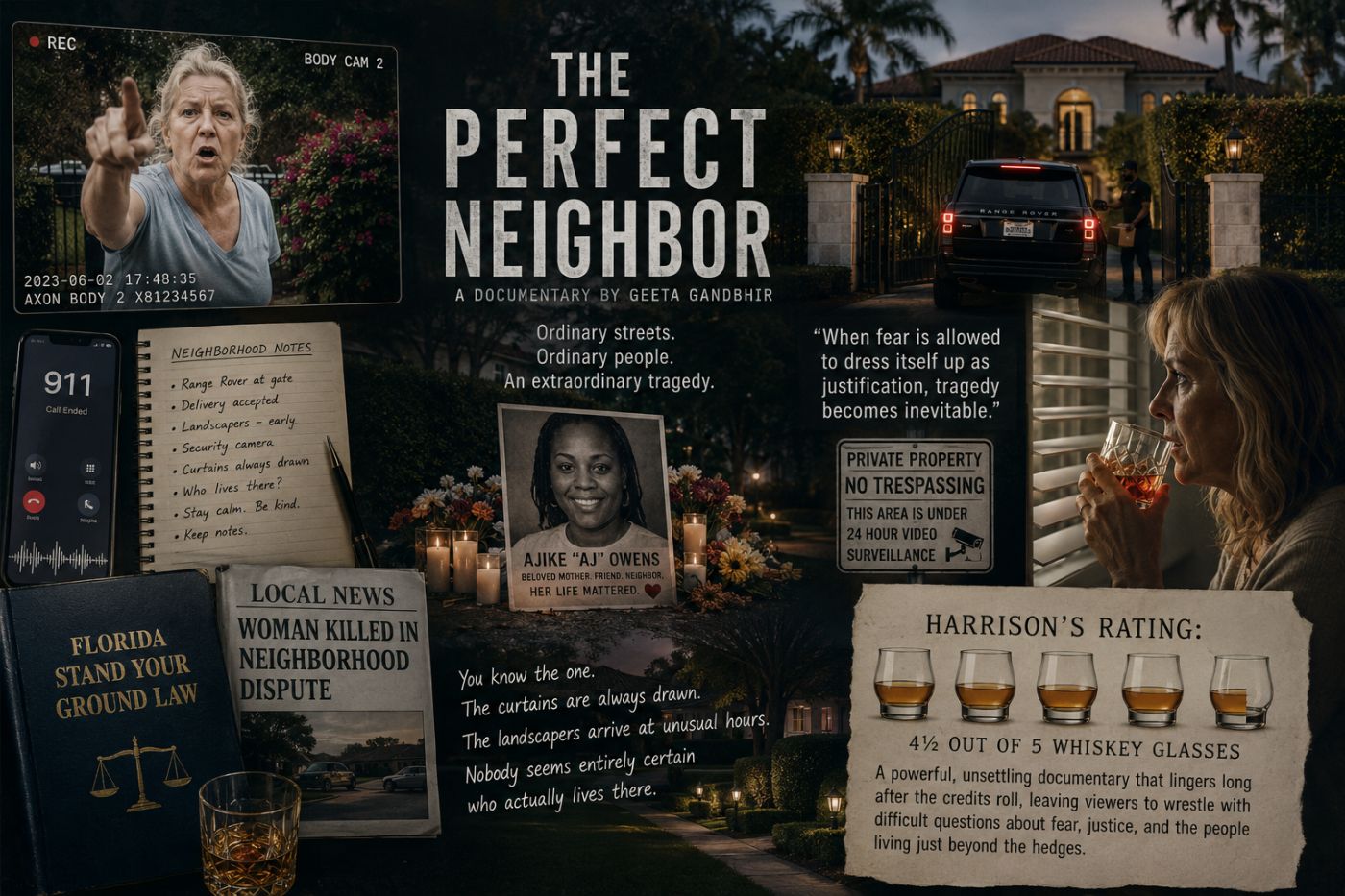
Three days after watching The Perfect Neighbor, I caught myself studying the house across the way because a Range Rover idled for five minutes at the gate. The house manager accepted a delivery with the grim discretion of someone either receiving organic dog food or disposing of a motive. I understand this is not a healthy response to cinema, but the film has a way of turning even the most polished neighborhood ritual into potential evidence.
Director Geeta Gandbhir’s documentary reconstructs the killing of Ajike “AJ” Owens through police body camera footage, 911 calls, and investigative interviews, creating a film that feels chilling precisely because it does not arrive dressed as a thriller. There are no cinematic villains, just children, porches, lawns, grudges, and the terrible realization that ordinary neighborhood friction can become catastrophic when fear is allowed to dress itself up as justification.
I found myself relating to the police officers who keep returning to the same dispute with the weary posture of people who know they are being asked to referee a problem that should have been solved by basic human decency several phone calls earlier. Anyone who has witnessed a Palm Beach argument over hedge height or a valet placement, will recognize the genre, though here the stakes are horrifyingly beyond petty.
Susan Lorincz, the film’s central and most unnerving figure seems like the sort of neighbor every community fears might be lurking behind the bougainvillea with a ring camera, a grievance, and far too much confidence in her own interpretation of events. Her paranoia becomes its own weather system, transforming children at play into threats, irritation into danger, and suspicion into something she believes the law should honor.
That is where The Perfect Neighbor becomes more than a portrait of one tragic incident; it becomes an indictment of the way fear can be weaponized when the legal system is asked to measure not only what happened, but what someone claims to have believed was happening. Florida’s Stand Your Ground law hovers over the film with a cold, bureaucratic menace, raising the uncomfortable question of whether a person’s private panic should ever be allowed to outweigh another person’s right to exist in peace.
AJ Owens remains the moral center of the documentary, even as much of her presence is shaped through absence, memory, and the heartbreak of those left behind. The film is careful to remind us that beneath the legal language, police procedure, and neighborhood hostility was a woman whose life was not a plot point, not a cautionary tale, and certainly not the inevitable result of a dispute that adults should have had the sense to de-escalate.
The Perfect Neighbor has me looking at my own street with a level of suspicion usually reserved for estate litigation and unmarked service vans. The gardener’s sudden interest in the side gate seems unnerving, the neighbor’s security lights give accusatory vibes, and the perfectly pleasant woman two houses down who always knows when everyone is traveling now strikes me as charmingly attentive or more likely running undercover sting masked with orchids.
That is the grim brilliance of the film. It makes you realize how fragile the social contract of neighborliness really is, especially in places where privacy is prized, gates are high, and everyone insists they are simply protecting what is theirs. Most communities depend on the quiet assumption that people will remain reasonable, or at least sufficiently well-mannered to keep their suspicions from becoming someone else’s tragedy.
As for me, I intend to remain calm, wave politely, and resist the urge to turn every slow-moving car into an investigative lead.
I am keeping notes. Discreetly, of course.
In the end, The Perfect Neighbor is not an easy watch, nor should it be. It is a sobering examination of fear, entitlement, and the dangerous consequences that can emerge when suspicion becomes more powerful than reason. The film succeeds because it never sensationalizes the tragedy at its center, instead allowing the facts, the footage, and the heartbreak to speak for themselves.
It also left me with the uncomfortable realization that while most neighbors are perfectly pleasant people simply trying to live their lives, there is always that one house on every street that makes you wonder. You know the one. The curtains are always drawn, the landscapers arrive at unusual hours, and nobody seems entirely certain who actually lives there.
Will The Perfect Neighbor make you question your own neighborhood? Probably. Will it make you glance twice at the security camera pointed toward the street? Quite possibly. Will it have you peering through plantation shutters with a tumbler in hand while convincing yourself you’re merely appreciating the landscaping? I can neither confirm nor deny.
Harrison’s Rating: 🥃🥃🥃🥃½ out of 5 Whiskey Glasses
A powerful, unsettling documentary that lingers long after the credits roll, leaving viewers to wrestle with difficult questions about fear, justice, and the people living just beyond the hedges.