The Wedding People
Espach has a particular talent for finding humor in emotional free fall, and The Wedding People may be her most precise balancing act yet.
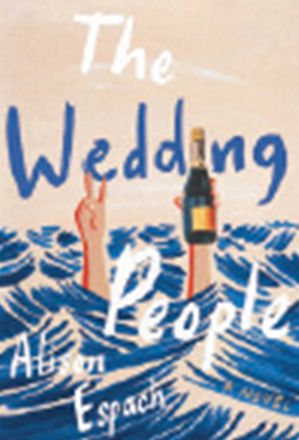
Espach has a particular talent for finding humor in emotional free fall, and The Wedding People may be her most precise balancing act yet. At once sharply funny and quietly devastating, the novel examines grief, reinvention, and the strange intimacy of being surrounded by strangers at a celebration you were never meant to attend. It is a story that understands how life’s most disorienting moments rarely arrive with solitude. Instead, they tend to unfold in the middle of noise, expectation, and other people’s joy.
The story centers on Phoebe Stone, a woman who arrives alone at a lavish seaside hotel during peak wedding weekend. She is simply there, carrying a heavy private sorrow that contrasts spectacularly with the champagne fueled joy unfolding around her. From the start, there is a quiet tension in watching Phoebe occupy a space that is both physically open and emotionally closed off to her.
Through a series of awkward encounters and unexpected conversations, Phoebe becomes entangled with members of the wedding party, each wrestling with their own anxieties beneath the satin and smiles. What begins as a backdrop gradually reveals itself as a web of interconnected insecurities, making Phoebe less of an outsider than she first appears.
Espach excels at writing characters who feel startlingly human. Phoebe is observant, dry, emotionally raw, and often very funny without trying to be. Her inner commentary cuts through wedding pageantry with surgical precision, skewering rituals that promise happiness while quietly pressuring everyone involved. Yet beneath the wit is a vulnerability that never feels performative. The supporting cast is equally well drawn, especially the bride, whose carefully constructed certainty begins to fracture as the weekend unfolds. Secondary characters who might have remained caricatures in another novel are instead given depth, their motivations layered and often contradictory.
What heightens The Wedding People beyond a clever premise is Espach’s control of tone. The novel never mocks grief, nor does it sentimentalize healing. Instead, it allows humor and pain to coexist on the same page, often within the same paragraph. Laughter becomes a coping mechanism rather than an escape, and the result feels genuinely honest. There is a rhythm to the writing that mirrors real emotional experience, where absurdity and sorrow frequently arrive hand in hand.
Perhaps the novel’s greatest strength is its refusal to offer easy resolutions. No one is magically fixed by the final chapter. Instead, there is a sense of movement, of subtle shifts in understanding rather than dramatic transformation. That restraint feels refreshing, especially in a story set against an event that traditionally demands tidy endings and lifelong promises. Espach trusts her readers to sit with ambiguity, and that trust pays off.
The Wedding People is a smart, observant, and deeply empathetic novel that will resonate with anyone who has ever felt out of step with the celebration around them. It speaks to the quiet dissonance of being present but not entirely included, of smiling through moments that do not quite belong to you. Espach proves once again that she understands the comedy of discomfort and the quiet bravery required to keep showing up when life does not resemble the brochure.
Perfect for readers who appreciate emotional intelligence served with wit, this is a book that lingers well after the cake is cut and the guests have gone home. It invites reflection long after the final page, not through grand revelations but through the accumulation of small, truthful moments that feel uncomfortably familiar in the best possible way.
As an Amazon Associate, we earn from qualifying purchases.