The Barn
Wright Thompson has built a reputation as one of the most thoughtful narrative journalists of his generation, known for blending sports, culture, and Southern identity into richly textured storytelling.
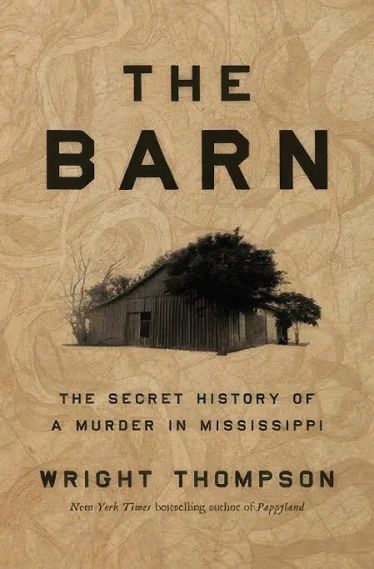
Wright Thompson has built a reputation as one of the most thoughtful narrative journalists of his generation, known for blending sports, culture, and Southern identity into richly textured storytelling. A Mississippi native, he has long explored the complexities of the region he calls home, often returning to its history, contradictions, and unresolved tensions. The Barn grows out of that lifelong engagement. Thompson has spoken about being haunted by the story of Emmett Till since childhood, and, more specifically, by the physical presence of the barn in Money, Mississippi, where part of the crime took place. The structure itself became a kind of obsession, a symbol of how history can remain hidden in plain sight, shaping the land and the people who live on it. That fixation ultimately inspired him to write a book that is as much about memory and place as it is about the crime itself.
The Barn is less a conventional true crime book and more a reckoning with American memory, place, and the long shadow of racial violence. Centered on the 1955 lynching of Emmett Till, Thompson approaches the story indirectly, using the barn as both a physical anchor and a metaphor for the nation’s uneasy relationship with its past.
Rather than retelling the case in a straightforward, chronological way, Thompson builds a layered narrative that moves between history, personal reflection, and cultural critique. The result is immersive and, at times, deliberately uncomfortable. He is not interested in offering neat closure. Instead, he examines how stories are preserved, distorted, or ignored depending on who is telling them and why.
One of the book’s greatest strengths is its sense of place. Thompson writes about the Mississippi Delta with a mix of intimacy and scrutiny, capturing its beauty while never letting the reader forget what the land has witnessed. The landscape becomes a character in its own right, carrying echoes of violence and silence. His prose often leans lyrical, occasionally bordering on poetic, which may not appeal to readers looking for a brisk, fact-driven account, but it deepens the emotional weight of the narrative.
The barn itself is a striking narrative device. Thompson uses it to explore how physical spaces hold history, even when communities attempt to move on or look away. The question hovering throughout the book is not just what happened to Emmett Till, but how America chooses to remember what happened. Museums, markers, and memorials are all part of that conversation, and Thompson interrogates them with a critical eye.
At times, the book’s structure can feel fragmented. Thompson circles the subject rather than confronting it head-on, revisiting themes and images in a way that mirrors memory more than traditional storytelling. For some readers, this approach may feel repetitive or indirect. For others, it will feel purposeful, reinforcing the idea that this history cannot be contained in a single narrative thread.
What ultimately sets The Barn apart is its moral urgency. Thompson does not allow the reader to remain a passive observer. He challenges the notion that this is simply a story of the past, making it clear that the legacy of Emmett Till’s murder continues to shape the present. The book asks difficult questions about accountability, remembrance, and the stories a nation tells itself to feel comfortable.
This is not an easy read, nor is it meant to be. It is reflective, probing, and at times haunting. Readers expecting a traditional true crime narrative may need to adjust their expectations, but those willing to engage with its deeper themes will find a work that lingers long after the final page.
As an Amazon Associate, we earn from qualifying purchases.